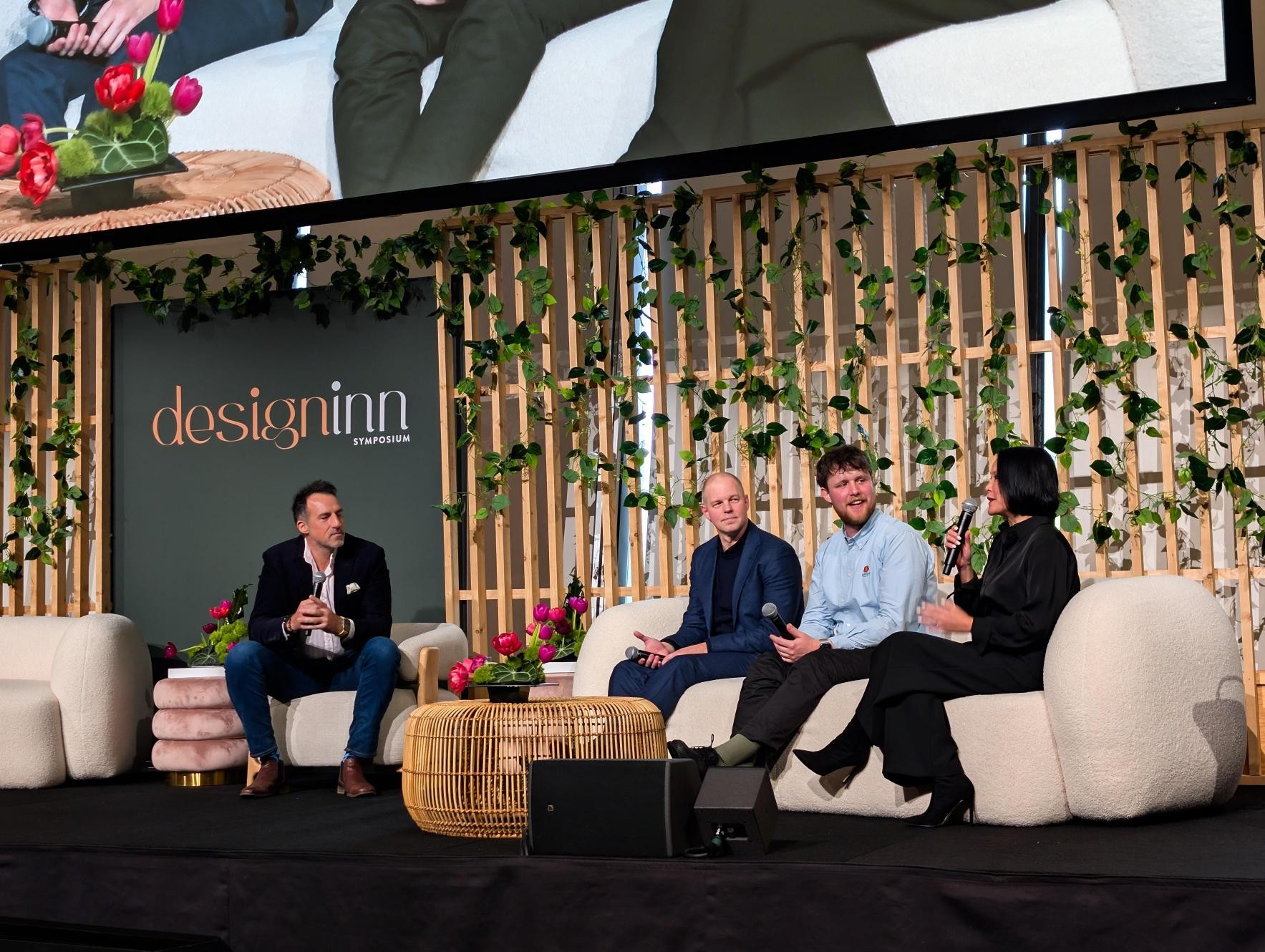
As part of this year’s AHICE program in Adelaide, WMK Directors David Thompson and Julie Ockerby attended Design Inn Symposium 2026, one of the hospitality industry’s leading forums exploring the future of hotel design, guest experience and operational innovation across Australasia.
Held at the iconic Adelaide Oval, the symposium brought together hotel operators, developers, designers and industry leaders to discuss the trends shaping the future of hospitality.
A key highlight for WMK was Julie participating as a panelist discussing:
Designing with intelligence: how AI is rewriting the future of hotel architecture and interiors.”
Alongside fellow panel members Ivan Sunde, Peter Rudl and Andrew Lymn-Penning, the conversation explored how AI is increasingly influencing architecture and interior design - not as a replacement for creativity, but as a tool to enhance it.
As Julie shared during the session:
“We’ve invested in our technology, and in our people, so we can work with greater efficiency while never compromising the integrity of our design outcomes. AI is a powerful tool, and we embrace it to elevate and support the artist, not to replace them.”
That balance between innovation and human-centred design became a defining theme throughout the day.
One of the more interesting insights came from Andrew at UniSA, who noted that while students are increasingly exposed to AI tools, their core ambition remains unchanged: they still want to design.
Across the discussions, AI was positioned less as a disruptor and more as an enabler, streamlining production processes and allowing design teams to focus more deeply on strategic thinking, creativity and guest experience outcomes.
The consensus was clear - technology may change workflows, but human insight and design thinking remain central to successful hospitality projects.
A recurring theme throughout Design Inn was the importance of creating spaces that foster genuine human connection.
LyLo founder Tim Alpe unpacked the evolution of communal accommodation and the three design pillars underpinning the LyLo model: Security, Privacy, Community
Particularly for solo travellers, these principles are increasingly shaping guest expectations and hospitality experiences. Tim spoke about customer-led design informed by guest feedback and AI insights, while remaining deeply focused on community and detail at every touchpoint.
This people-first approach extended across multiple sessions, from discussions around F&B environments and “living galleries” to hospitality spaces designed to create authentic local connection and a stronger sense of place.
Another strong message throughout the symposium was the importance of early collaboration between operators, designers and stakeholders.
In sessions exploring F&B venues and hotel refurbishments, panelists consistently highlighted that successful hospitality outcomes depend on aligning operational realities with design ambition from the outset.
A masterclass unpacking the refurbishment of the Amora Hotel Adelaide identified three essential ingredients for project success: Early collaboration, Adaptive delivery, Clear vision. These ideas reinforced the growing industry focus on integrated thinking and operationally-led design.
Wellness tourism also featured prominently throughout the program, with the sector now representing a reported $200 billion industry in Australia and continuing to grow rapidly.
The conversations reflected how hotels are evolving beyond accommodation alone, increasingly integrating wellness, lifestyle and community-driven experiences into the guest journey.
One particularly impactful session came from ReLove, whose work repurposes surplus hotel furniture and fittings that would otherwise head to landfill to support families displaced by domestic violence. In 2025 alone, the organisation rehomed more than $10 million worth of furniture, with expansion into Melbourne and Brisbane planned.
It was a powerful reminder that hospitality projects can create meaningful social outcomes well beyond the built environment itself.
Looking ahead, Design Inn 2026 reinforced that the future of hospitality design will not be defined by technology alone, but by how thoughtfully it is applied.
For our team, the conversations in Adelaide highlighted the importance of balancing innovation with intent, leveraging new tools and technologies while remaining focused on authenticity, creativity and the human experience at the centre of every project.
